
What Are Midges? How They Compare to Mosquitoes and What to Do About Them
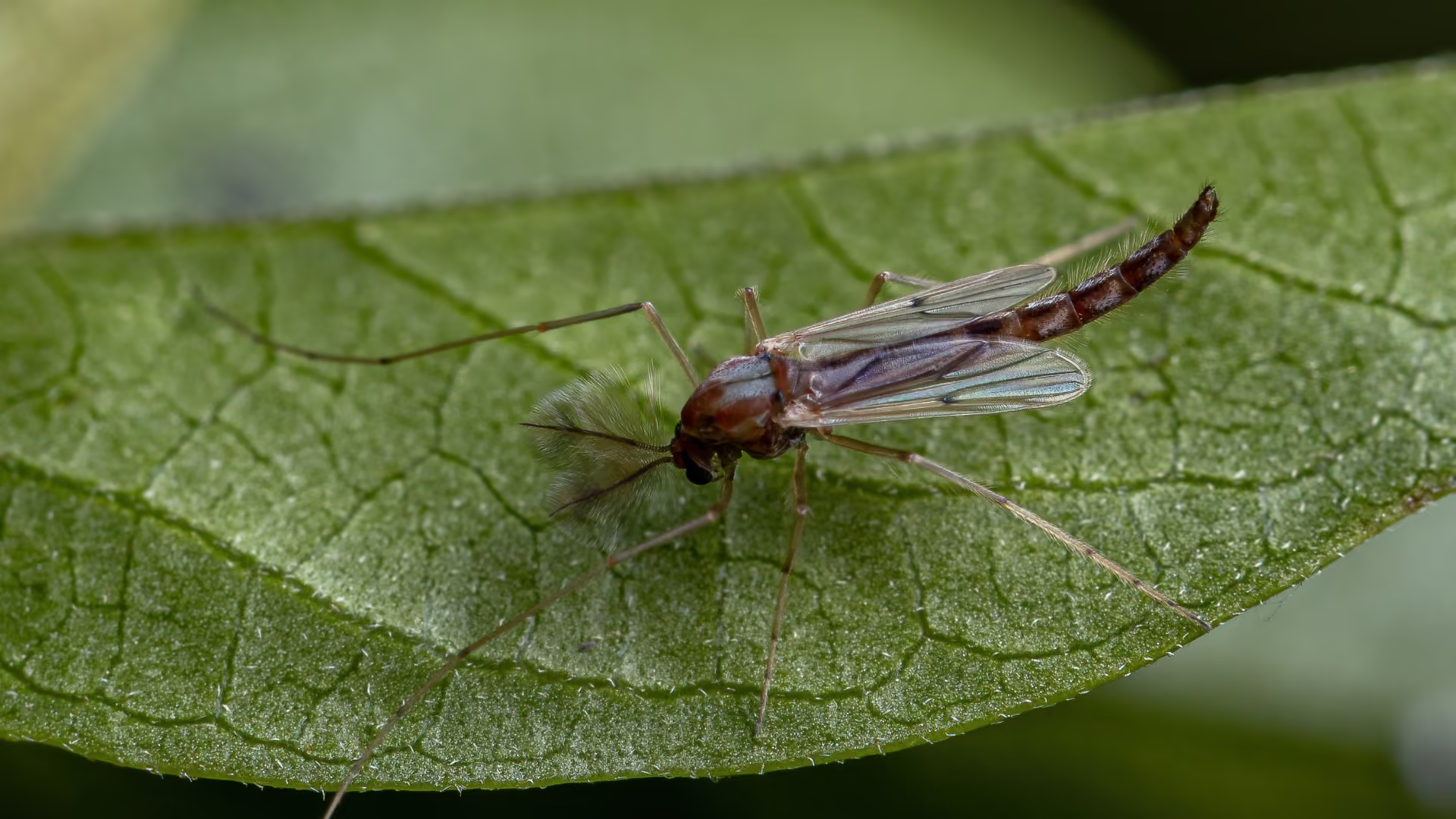
If you've ever walked outside at dusk and found yourself surrounded by a cloud of tiny flying insects that don't seem to be biting, there's a good chance you were dealing with midges, not mosquitoes. The two get mixed up constantly, and for good reason: they look similar, swarm in similar conditions, and often show up around the same standing water that mosquitoes love. Understanding what midges are, how they differ from mosquitoes, and what to do when either one takes over your yard makes a real difference in how you spend time outside this season.
What Are Midges and How Do They Differ From Mosquitoes
Midges are small, two-winged insects that belong to several different fly families. When people talk about midges bugs in a backyard context, they're usually referring to one of two groups: biting midges (also called no-see-ums or punkies) and non-biting midges (often called chironomids). Both types look like tiny mosquitoes at a glance, but there are real differences once you know what to look for.
Non-biting midges are probably the most common culprit behind those harmless-looking swarms near lakes, ponds, and slow-moving water. They don't feed on blood, and they don't transmit disease. The males often form dense mating swarms in the air, especially around dawn and dusk. If you're walking through a cloud of tiny insects that scatter and don't land on you, those are almost certainly non-biting midges.
Biting midges are a different story. These insects midges are incredibly small, sometimes just 1 to 3 millimeters long, which is why they can slip through standard window screens. A midge bug bite from this category causes a sharp, stinging sensation followed by a welt that can itch for days, sometimes more intensely than a typical mosquito bite. They're drawn to the same humid, warm conditions that make Atlanta and the surrounding area so productive for mosquitoes during summer.
Both types breed in moist or aquatic environments, which is one reason midge activity often overlaps with peak mosquito season in Georgia.
Midges vs. Mosquitoes: Spotting the Difference
Knowing which insect you're dealing with helps you respond the right way. Mosquitoes and midges share a lot of habitat preferences, but they behave differently and require slightly different approaches to control.
Mosquitoes are generally larger, ranging from 3 to 12 millimeters depending on the species. They hold their body in a distinctive resting posture with their hind legs raised, and most people recognize the buzzing sound they make near your ear. There are multiple types of mosquitoes in Georgia, including the Asian tiger mosquito and the southern house mosquito, and they all require a blood meal to reproduce. Only female mosquitoes bite.
Midges, by contrast, hold their wings flat or slightly angled when resting. They don't make a noticeable buzzing sound. Non-biting midges have feathery antennae that are more visible than a mosquito's. Biting midges are so small they're often invisible until you feel them on your skin.
One key overlap: both lay eggs in or near water. Mosquito larvae in water are well-documented, developing in standing puddles, birdbaths, clogged gutters, and any container that holds rain. Midge larvae are also aquatic, often found in the muddy sediment of ponds, marshes, and slow-moving streams. If your yard has drainage issues or holds water after rain, you're likely supporting both populations at once.
A mos bite and a biting midge bite can feel similar in the moment, but a midge bite tends to produce a smaller, rounder welt that itches intensely. Both can cause allergic reactions in sensitive individuals.
Midge Bite vs. Mosquito Bite: How to Tell the Difference
The short answer: a midge bite and a mosquito bite can look nearly identical at first glance, but they behave differently on your skin. Knowing which one got you matters, because the itch pattern, swelling, and duration are distinct enough to narrow it down.
What the bite looks like
Mosquito bites typically raise a single, rounded welt, usually 1 to 2 centimeters across, that appears within minutes of the bite. The center may show a small puncture point. Midge bites (from the tiny insects midges that swarm near standing water and marshy areas) tend to produce a cluster of smaller, redder spots. Because midges bite in groups, you'll often find several marks close together rather than one isolated welt.
Itch intensity and duration
Mosquito bites itch hard and fast. The reaction peaks in the first hour or two, then gradually fades over a day or so for most people. Midge bites are known for a slower, more persistent itch that can last several days. In people with sensitive skin, midge bites occasionally cause a broader raised patch that resembles a mild allergic reaction, something less common with a standard mosquito bite.
Swelling and skin response
The common thread: standing water
Both insects breed in or near water. Mosquito larvae in water, even a small amount pooled in a pot saucer or clogged gutter, are the source of the mosquitoes biting your yard. Midges bugs follow similar patterns, favoring ponds, boggy soil, and wet grass edges. If you're getting bitten heavily in your outdoor space, the source is almost certainly nearby standing water regardless of which insect is responsible.
Treating your yard for mosquitoes through professional mosquito spraying will reduce midge pressure at the same time, since the application targets the same resting and breeding zones. If bites are a recurring problem around your property, reach out to our team to talk through what's going on.
Why Midges and Mosquitoes Thrive in the Same Yards
The conditions that attract one often attract the other. Warm temperatures, high humidity, standing water, and dense vegetation create the kind of environment where both midges and mosquitoes reproduce in large numbers. In Atlanta and the surrounding metro area, summer provides all of that reliably from May through October.
Standing water is the single biggest driver. Mosquitoes need as little as a bottle cap of water to lay eggs. Midges need access to muddy pond edges, wet soil, or slow-moving water. If your property backs up to a retention pond, has low-lying areas that hold runoff, or has gutters that don't drain properly, you're creating breeding habitat for both.
Dense shrubs and ground cover trap moisture and provide shade that extends the window during which insects are active. Midges in particular are attracted to light at night, which is why outdoor lighting near doorways can concentrate them around entry points to your home.
The good news is that controlling conditions that favor mosquitoes tends to also reduce midge populations. Eliminating standing water, improving drainage, and treating vegetation with professional-grade products disrupts the breeding cycle for both insects. If you're already dealing with a mosquito problem, addressing it thoroughly is often the most effective step you can take against midges too. Professional mosquito spraying targets resting sites in foliage where both insects congregate during the day.
What You Can Do Around Your Yard Right Now
There are several practical steps that reduce both midge and mosquito pressure without requiring professional treatment as a first move, though the results from DIY efforts are usually temporary.
Start by walking your property after any rain and emptying anything that holds water: flowerpot saucers, tarps, kids' toys, wheelbarrows, and low spots in the lawn. Check gutters and make sure downspouts are directing water away from the foundation. If you have a birdbath, change the water every two to three days. Mosquito larvae in water can hatch in less than a week, so frequency matters.
Trim back overgrown landscaping, especially in shaded corners of the yard where moisture collects. Midges and mosquitoes both use dense vegetation as a resting zone between feeding. Reducing that cover makes your yard less hospitable.
For ponds on your property, consider installing a fountain or aerator to keep the water moving. Mosquitoes and midges both struggle to lay eggs in moving water. Biological treatments like Bacillus thuringiensis israelensis (Bti) can be added to ornamental ponds to kill larvae without harming fish or other wildlife.
Outdoor fans on patios and decks provide genuine relief. Both midges and mosquitoes are weak fliers and can't navigate well in a consistent breeze. This won't eliminate them, but it makes sitting outside more bearable while other measures take effect.
If you've done all of this and you're still seeing heavy activity, the breeding source is likely nearby but off your property, or there's a water source you haven't identified. That's when professional treatment makes the most sense. A residential mosquito misting system can provide consistent, automated protection that covers your yard on a schedule, which is far more reliable than sporadic sprays or repellents.
When to Call a Professional for Midge and Mosquito Control
If swarms are forming near your doors, bites are happening every time you step outside, or you've already tried removing standing water and nothing has changed, it's time to bring in help. DIY sprays from the hardware store break down quickly in heat and rain, and they rarely reach the areas where insects are actually resting during the day.
Tuxedo Mosquito Control serves homeowners across the Atlanta metro and beyond, treating yards with targeted applications that knock down active adult populations and interrupt the breeding cycle before it restarts. Services include scheduled mosquito spraying, automated misting systems, and mosquito traps that provide continuous pressure on local populations.
Because midges and mosquitoes share breeding habitat and resting zones, professional mosquito treatments often reduce midge activity as well. If you're in Atlanta, Marietta, Roswell, or one of the many surrounding communities, Tuxedo Mosquito serves your area and can assess your property for the specific conditions driving your insect problem.
Treatments are available for both routine season-long protection and one-time applications before outdoor events. Either way, the goal is the same: getting you back outside without spending the evening swatting.
Frequently Asked Questions
Are midges the same thing as mosquitoes?
No, midges and mosquitoes are different insects, though they're often confused because of their similar size and the overlapping environments they prefer. Mosquitoes belong to the Culicidae family, while midges belong to several other fly families including Chironomidae (non-biting midges) and Ceratopogonidae (biting midges). Non-biting midges don't feed on blood at all. Biting midges do, and their bite can be more irritating than a typical mosquito bite despite their much smaller size.
Do midges carry diseases like mosquitoes do?
Non-biting midges don't bite and pose no direct health threat to humans. Biting midges can transmit certain diseases to livestock, including bluetongue virus in cattle and sheep, but in the United States they're not considered significant vectors of human disease. Mosquitoes, by contrast, are linked to West Nile virus, Zika, Eastern equine encephalitis, and other illnesses depending on the species and region. This is one of the more important practical differences between the two insect types.
Why do midges swarm around lights at night?
Most midge species, especially non-biting midges, are attracted to artificial light. This is a common behavior among flying insects and is related to how they navigate. Outdoor lights near doorways, patio string lights, and porch fixtures can all draw midges in large numbers after dark. Switching to yellow or amber bulbs, which are less attractive to insects than white or blue-spectrum light, can reduce how many gather around your entry points without eliminating lighting entirely.
What's the best way to get rid of both midges and mosquitoes in my yard?
The most effective approach combines source reduction with targeted treatment. Start by eliminating standing water, improving drainage, and trimming dense vegetation where insects rest during the day. These steps reduce breeding habitat for both groups. For faster and more lasting results, professional treatment covers the areas where insects actually shelter, including undersides of leaves, dense shrubs, and shaded ground cover. Reaching out to Tuxedo Mosquito for a property assessment is a practical next step if the problem has already gotten out of hand.
Get Control of Your Yard This Season
Midges and mosquitoes are both frustrating, and they both thrive in the same warm, humid Georgia climate that makes outdoor living so appealing in the first place. The good news is that the steps that reduce one tend to reduce the other. If you've hit the limits of what DIY can do, Tuxedo Mosquito Control has the treatments and systems to give you real relief. Contact us today to find out what's right for your yard and get back to enjoying the outdoors.
Contact Tuxedo Mosquito Control Today
A member of our team will be in touch shortly to confirm your contact details, or address questions you may have.